 Search for products...

 English
 中文简体
中文简体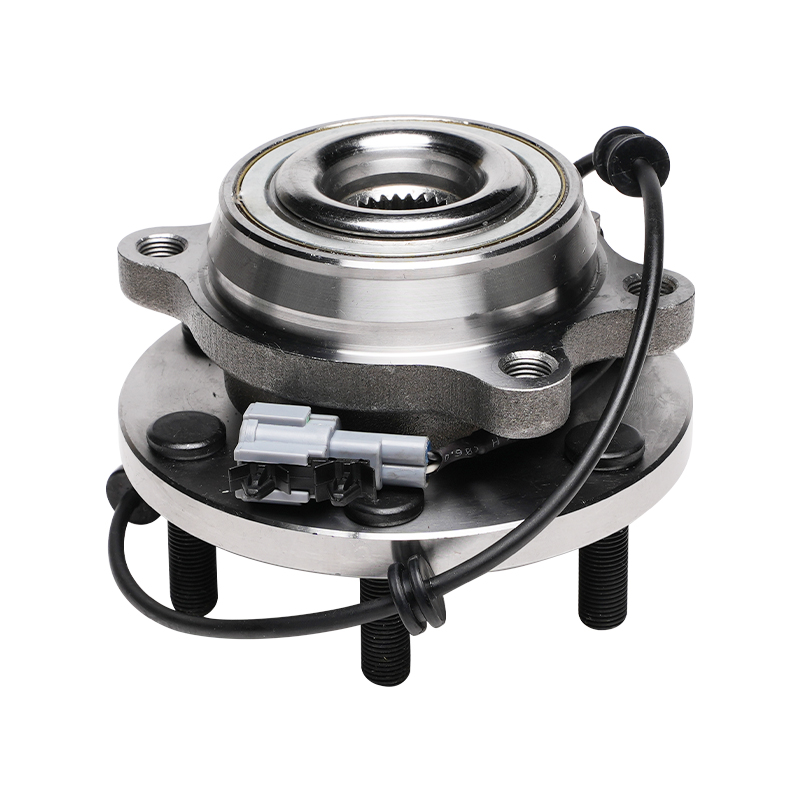
Looking For Business Opportunity?
Request for a call today
NEW
 Home / News / Industry News / What Is the Difference Between Generation 1, Generation 2, and Generation 3 Wheel Hub Bearings?
 2026.03.08
 Industry News
Wheel hub bearings have evolved through three distinct design generations over the past four decades. These generations — commonly referred to as Gen 1, Gen 2, and Gen 3 — represent progressively higher levels of integration between the bearing, the wheel hub, the vehicle knuckle, and the ABS wheel speed sensing system. The generation of a wheel hub bearing determines how it is installed, what other components it replaces, how the ABS sensor integrates with it, and what level of disassembly a replacement requires.
For automotive parts distributors, repair shops, and OEM procurement teams, understanding the three generations is fundamental to correct parts identification, accurate quotation, and ensuring that the replacement supplied matches the vehicle's design requirements. A Gen 1 bearing cannot substitute for a Gen 3 unit on a vehicle designed for Gen 3, and vice versa — they are not interchangeable. This guide explains the design, structure, installation method, and typical vehicle applications of each generation.
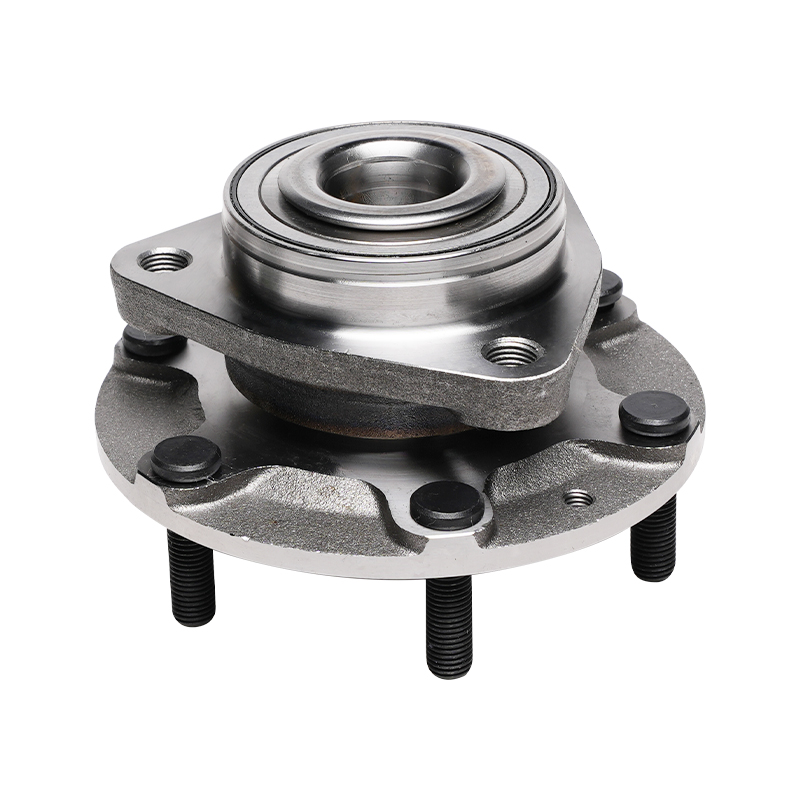
Generation 1 (Gen 1) wheel hub bearings are the oldest design generation, consisting of a conventional tapered roller bearing or double-row ball bearing that is a separate, serviceable component installed within the vehicle's steering knuckle or axle housing. The Gen 1 bearing itself is not pre-assembled with the wheel hub — the bearing must be pressed into the knuckle bore or onto the hub shaft, and the wheel hub is a separate part that is installed over or into the bearing after it is in place in the knuckle.
A typical Gen 1 front wheel bearing assembly consists of:
Installation of a Gen 1 bearing requires a hydraulic press to press the bearing into the knuckle bore and to press the hub through the bearing inner ring. Disassembly for replacement also requires a press to extract the old bearing from the knuckle. This means Gen 1 bearing replacement typically cannot be performed with basic hand tools — it requires either a workshop press or a hub puller/press tool set specific to the vehicle application.
Most Gen 1 bearings were designed before integrated ABS wheel speed sensors became standard. On vehicles with ABS that use Gen 1 bearings, the wheel speed sensor is a separate component — typically a passive or active sensor mounted in the knuckle or adjacent to the hub — reading a toothed tone ring that is a separate press-on part on the axle shaft or hub. Replacement of the bearing itself does not affect the sensor, which remains in place in the knuckle.
Gen 1 bearings are found predominantly on older vehicle models — vehicles designed and produced through the late 1980s and into the 1990s — and on certain rear axle positions of vehicles that continued using the traditional design for rear non-driven wheels. They remain in active production because a large vehicle parc of older models still requires service replacement parts. Common applications include older Japanese models (pre-2000 Toyota, Honda, Nissan rear axles), older American trucks and SUVs, and older European vehicles across multiple brands.
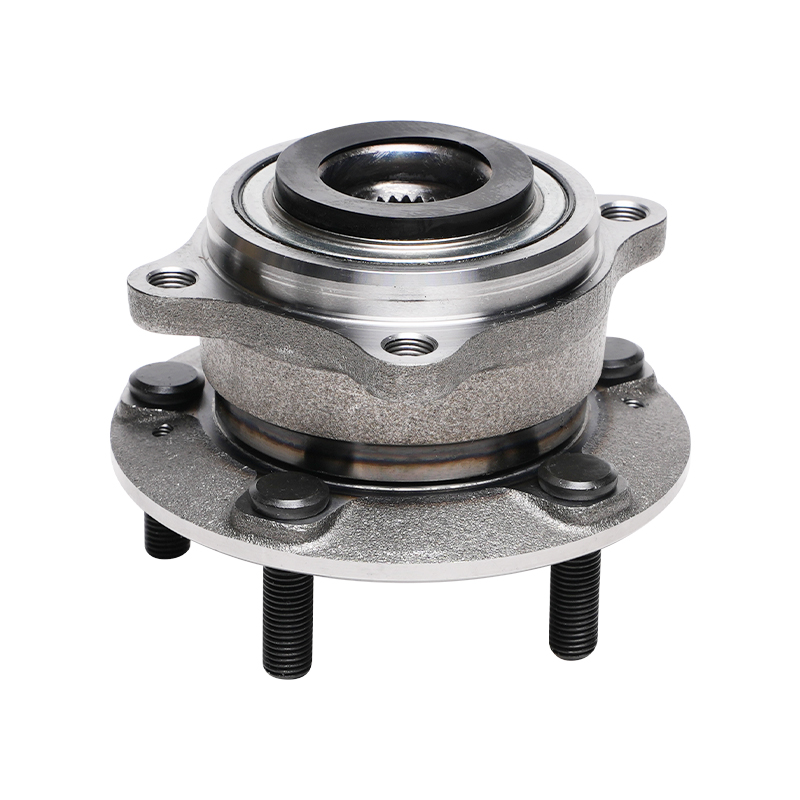
Generation 2 (Gen 2) wheel hub bearings integrate the bearing and the wheel hub flange into a single pre-assembled unit. The bearing inner ring is integrated with — or permanently press-fit to — a flanged hub that carries the wheel bolts or wheel bolt holes directly. The assembly arrives from the manufacturer as a complete unit: hub flange, bearing (with inner and outer rings, rolling elements, cage, and seals), and in most cases an integrated ABS encoder ring.
In a Gen 2 design, the outer ring of the bearing still presses into the steering knuckle bore — this part of the installation still requires a press. But the inner ring and hub flange are already integrated, eliminating the separate hub pressing step. The Gen 2 assembly is installed by pressing the complete unit (hub-and-inner-ring) through the knuckle bore, or in some designs, pressing the outer ring into the knuckle with the hub assembly following. A central spindle nut retains the assembly axially.
Replacement still requires a press for the outer ring extraction and installation, but the pre-assembled nature of the unit means the bearing inner ring and hub arrive already assembled and correctly preloaded from the factory — there is no field adjustment of bearing preload required.
Gen 2 units typically incorporate an ABS encoder ring — a magnetic or toothed ring — integrated into the inboard seal of the bearing assembly. The ring rotates with the inner ring and hub, and the externally-mounted wheel speed sensor in the knuckle reads the ring as it passes. Because the encoder ring is built into the bearing seal, replacing the Gen 2 bearing unit also replaces the encoder ring as a single operation, ensuring the ABS signal quality is restored with the new bearing.
Gen 2 bearings became the dominant design from the early to mid-1990s onward for front wheels of most front-wheel-drive passenger cars and many rear-wheel-drive vehicles. They are widely used across Japanese, Korean, European, and American vehicles from the mid-1990s through the early 2000s. Examples include many Toyota Camry, Honda Accord, Hyundai Sonata, and Volkswagen Golf applications from this era, as well as numerous others across all vehicle origins.
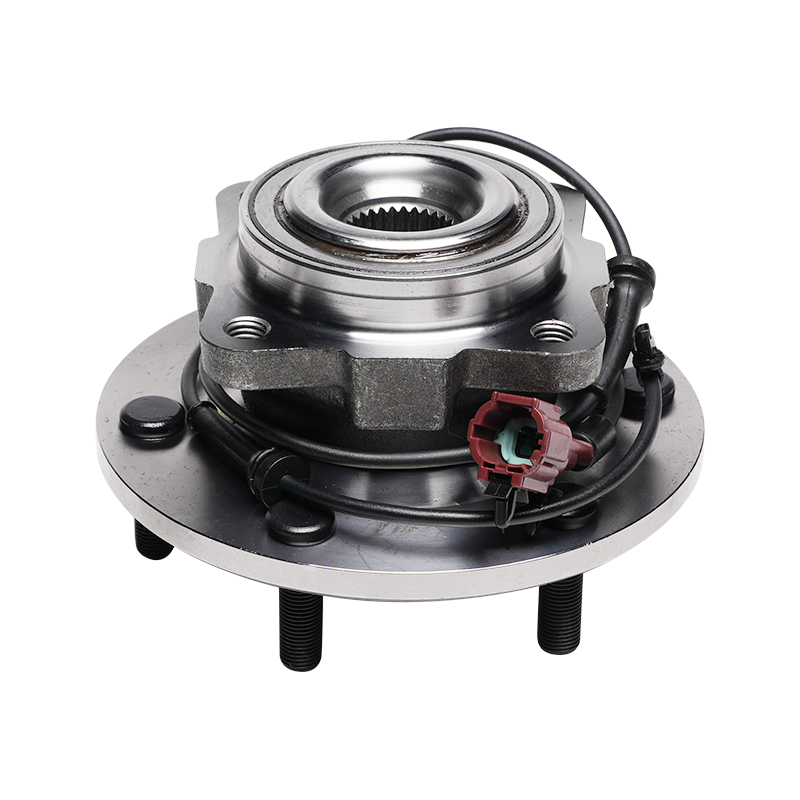
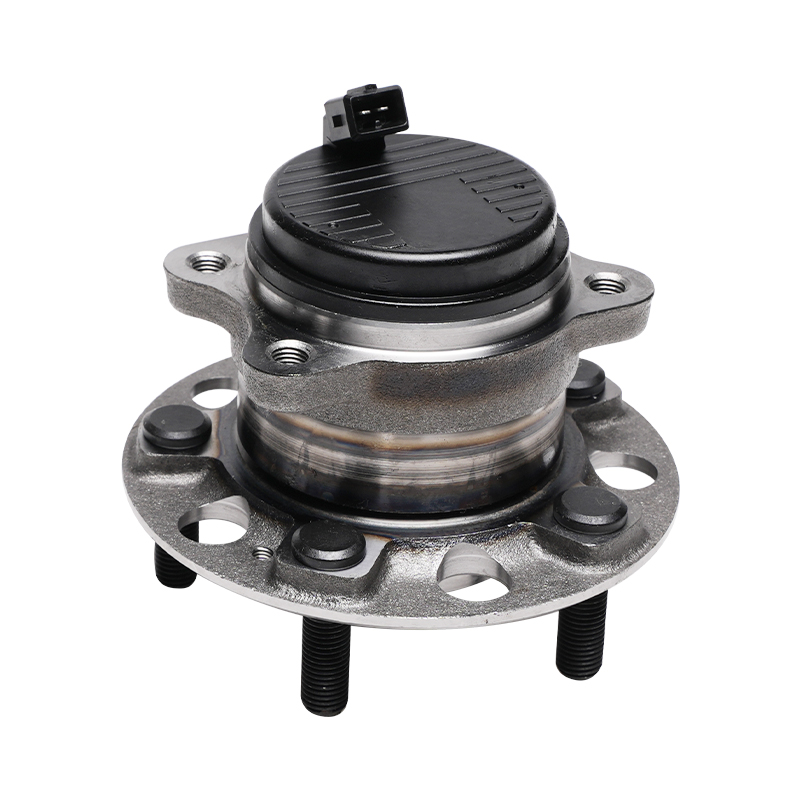
Generation 3 (Gen 3) wheel hub bearings are the most highly integrated design, combining the bearing, hub flange, and — in most designs — the ABS wheel speed sensor connector into a single pre-assembled unit that bolts directly to the steering knuckle with a ring of bolts, requiring no press for either installation or removal. This bolt-on design is the generation most commonly found on modern vehicles and is the dominant format for replacement parts on vehicles produced from the mid-2000s onward.
A Gen 3 wheel hub assembly consists of:
Installation requires removing the brake caliper and rotor/drum to access the knuckle face, removing the bolts retaining the old assembly to the knuckle, pulling the old unit off (which may require a hub puller if corrosion has bonded the hub to the axle shaft on driven axles), and torquing the new assembly's mounting bolts to specification. No hydraulic press is required. This significantly reduces the tools, time, and skill level required for replacement compared to Gen 1 and Gen 2 — many Gen 3 bearing replacements can be completed by a competent technician with basic workshop tools in 1–2 hours.
Gen 3 assemblies integrate ABS sensing most completely. The encoder ring is built into the bearing seal, the sensor mount is on the knuckle side, and many Gen 3 units include a pre-installed active sensor within the assembly that connects to the vehicle wiring harness via a plug. Active sensors (Hall effect) can detect both wheel speed and direction of rotation, providing more data to modern vehicle stability and traction control systems than the passive sensors used with older generations.
Gen 3 is the standard wheel hub bearing design for most passenger cars, SUVs, and light trucks produced from the mid-2000s to the present across all vehicle origins. It is the format found on the majority of current-production Japanese vehicles (Toyota, Honda, Nissan, Mazda, Subaru from approximately 2005 onward), most current American vehicles (Ford, GM, Chrysler/Stellantis), most current European vehicles (BMW, Mercedes-Benz, Audi/VW, Volvo), and most current Korean vehicles (Hyundai, Kia). For high-volume automotive parts distribution, Gen 3 assemblies represent the largest segment of the wheel hub bearing replacement market.
| Property | Generation 1 | Generation 2 | Generation 3 |
|---|---|---|---|
| Hub integration | Separate hub and bearing — two distinct parts | Hub and inner ring integrated — one pre-assembled unit | Hub, bearing, and knuckle interface all integrated — single bolt-on assembly |
| Installation method | Press fits into the knuckle bore; requires a hydraulic press | Outer ring presses into the knuckle; requires a press | Bolts to knuckle face; no press required |
| Removal method | Press required to extract bearing from knuckle | Press or puller required | Unbolt from the knuckle; a hub puller may be needed for axle shaft separation |
| ABS encoder ring | Separate tone ring on axle/hub, not part of bearing | Integrated into bearing seal — replaced with bearing | Integrated into the bearing seal, an active sensor is often included in the assembly |
| Typical replacement time | 2–4 hours (press operations) | 1.5–3 hours (press operations) | 1–2 hours (bolt removal and installation) |
| Tools required | Hydraulic press, press adaptors, hub puller | Hydraulic press, press adaptors | Standard workshop tools: hub puller for driven axles |
| Typical era/applications | Pre-2000 vehicles; older rear axles | Mid-1990s to mid-2000s front axles | Mid-2000s to current — dominant format on modern vehicles |
| Market segment | Older vehicle service replacement | Mid-age vehicle service replacement | Largest replacement volume — current vehicle fleet |
Specifying a wheel hub bearing without confirming the generation is one of the most common causes of incorrect parts supply in automotive aftermarket distribution. Two vehicles of similar age and size from the same manufacturer may use different bearing generations depending on the model year — a mid-cycle update may have switched from Gen 2 to Gen 3, and both years of the model are in active service simultaneously, requiring different parts. Without year-specific generation confirmation, the wrong part is shipped.
For parts distributors and OEM procurement teams, a complete specification for a wheel hub bearing order should include: vehicle year, make, model, and trim level; driven or non-driven axle (front/rear); left or right position (relevant for some ABS sensor connector orientations); and — if available — the OEM part number from the original assembly. Cross-referencing the OEM part number to the replacement catalog is the most reliable way to confirm the generation and all dimensional and ABS interface requirements before dispatch.
No, they are not interchangeable. A Gen 3 assembly requires a knuckle with a flat mating face and bolt holes for the outer ring flange. A Gen 2 requires a knuckle with a cylindrical bore for the outer ring to press into. The knuckle geometry for each generation is different, and using the wrong assembly generation for the vehicle's knuckle design is not physically possible without modifying the knuckle, which is not a legitimate repair approach. Always match the replacement bearing to the generation the vehicle was designed for.
The quickest visual identification method — with the wheel removed and the brake components exposing the hub and knuckle — is to look at how the hub assembly attaches to the knuckle. If you see a ring of bolts on the back face of the knuckle (typically 3 or 4 bolts) securing the hub flange to the knuckle, it is Gen 3. If the hub assembly appears to be pressed into a bore in the knuckle with no visible bolts from the rear and a large central spindle nut visible at the center, it is Gen 1 or Gen 2. A vehicle application database (such as a cross-reference catalog using vehicle year/make/model) is the most reliable confirmation tool for parts professionals.
Gen 1 bearings support ABS through a separately mounted sensor and tone ring — the bearing itself has no ABS-specific features. Gen 2 and Gen 3 bearings integrate the ABS encoder ring into the bearing seal assembly, and Gen 3 often integrates the active sensor into the bearing unit as well. For vehicles with ABS (all current vehicles, and most post-1995 vehicles), replacing a bearing with a unit that does not include the correctly positioned and specified encoder ring will cause ABS faults and potentially disable ABS, stability control, and traction control. When replacing Gen 2 or Gen 3 bearings on ABS-equipped vehicles, always confirm the replacement includes the integrated encoder ring to specification.
Zhejiang Lckauto Parts Co., Ltd. supplies Generation 1, Generation 2, and Generation 3 wheel hub bearings and wheel hub assemblies for Japanese, American, European, Korean, and German vehicles, covering a wide range of passenger cars, SUVs, and light trucks across all model years in active service. Products are manufactured to OEM-equivalent specifications, including bearing geometry, preload, ABS encoder ring integration, and sensor connector compatibility. Wholesale, distribution, and OEM/ODM supply available with full catalog coverage across vehicle origins.
Contact us with vehicle year, make, model, position, and OEM part number to identify and quote the correct wheel hub bearing for your application.
Related Products: Japanese Cars Wheel Hub Bearing | American Cars Wheel Hub Bearing | European Cars Wheel Hub Bearing | Korean Cars Wheel Hub Bearing | German Cars Wheel Hub Bearing
Request for a call today


Tel: +86 0575-87785959

E-mail: [email protected]

Add:Room 215, Building 3, No. 1887, Asia Pacific Road, Wenyan Street, Xiaoshan District, Hangzhou, Zhejiang, China
