 Search for products...

 English
 中文简体
中文简体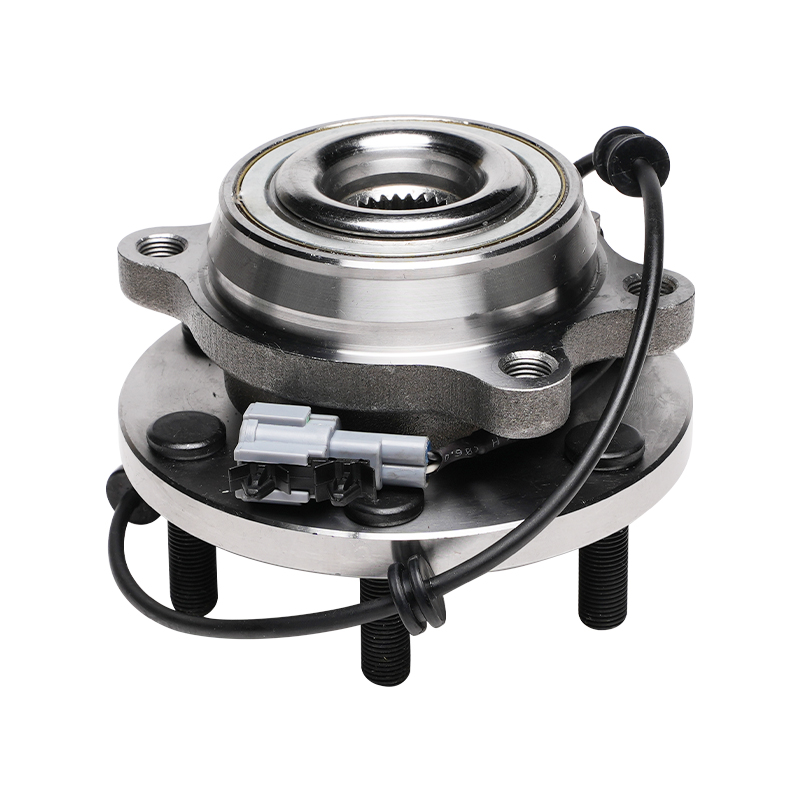
Looking For Business Opportunity?
Request for a call today
NEW
 Home / News / Industry News / Wheel Bearing Noise: How to Identify Symptoms and Know When to Replace
 2026.03.22
 Industry News
Wheel bearings fail gradually, and the symptoms they produce follow a predictable progression. A bearing in early failure produces a subtle noise that most drivers dismiss as road noise or tire noise. As the bearing continues to degrade, the noise becomes more pronounced and develops characteristics that distinguish it from other vehicle noise sources. In late-stage failure, the bearing may produce vibration through the steering wheel or seat, cause the vehicle to pull under braking, or — in severe cases — allow detectable wheel play. Understanding these symptoms and what causes them helps drivers and technicians identify failing bearings early, before a minor problem becomes an expensive or dangerous one.
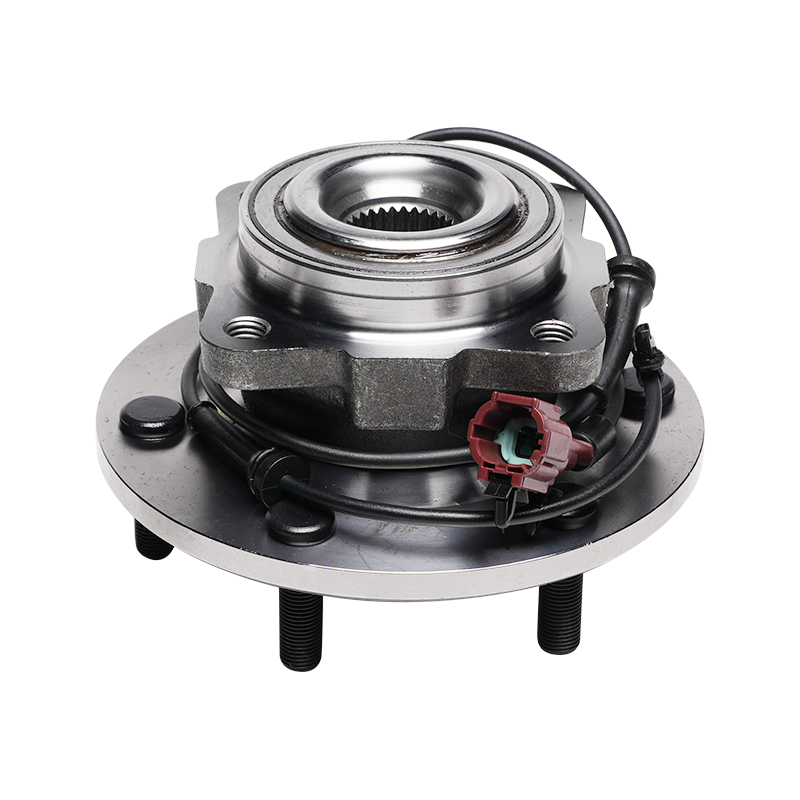
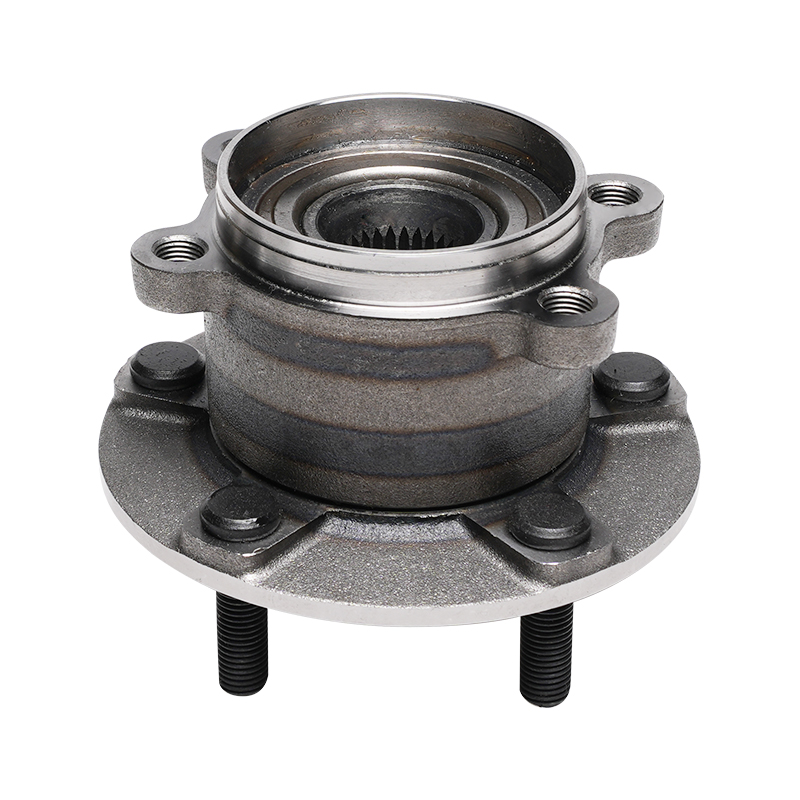
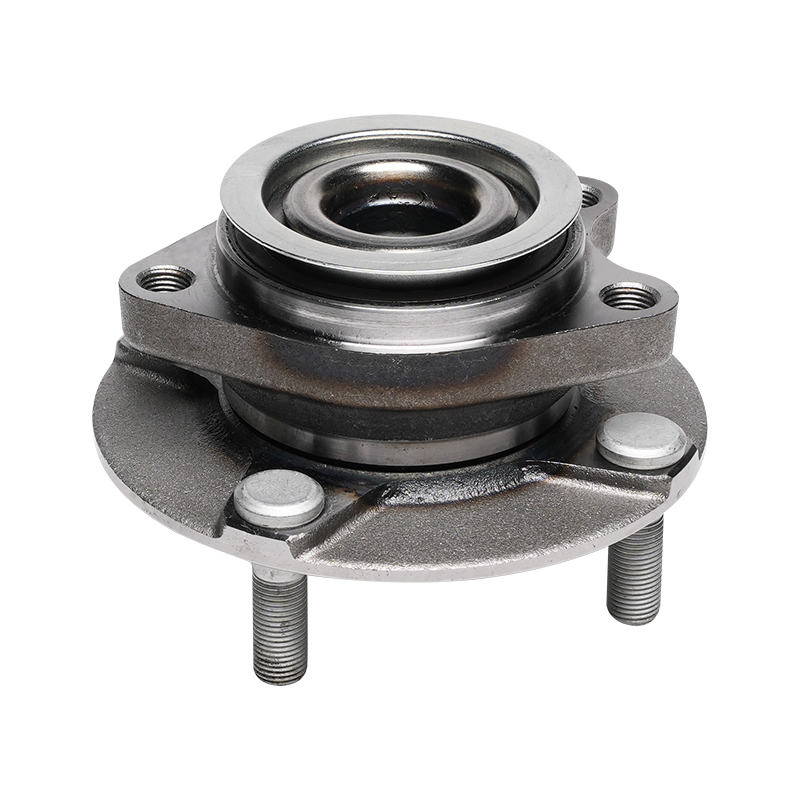
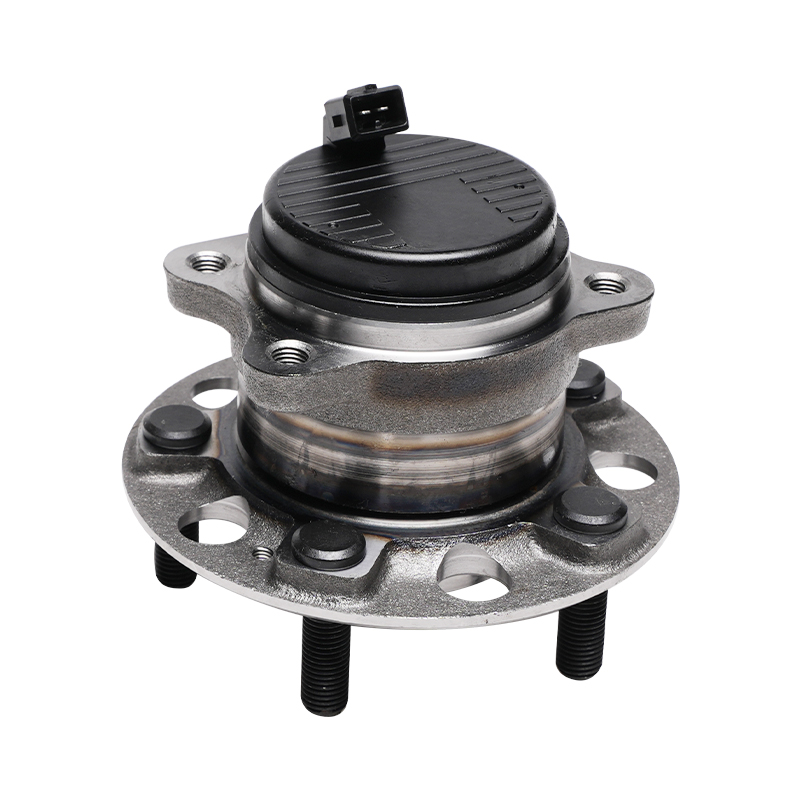
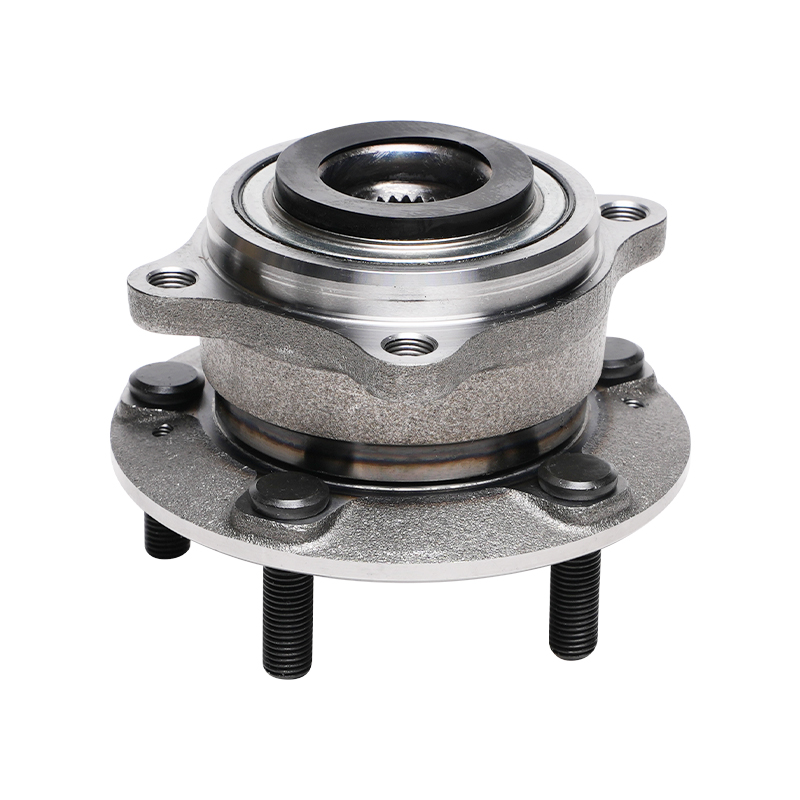
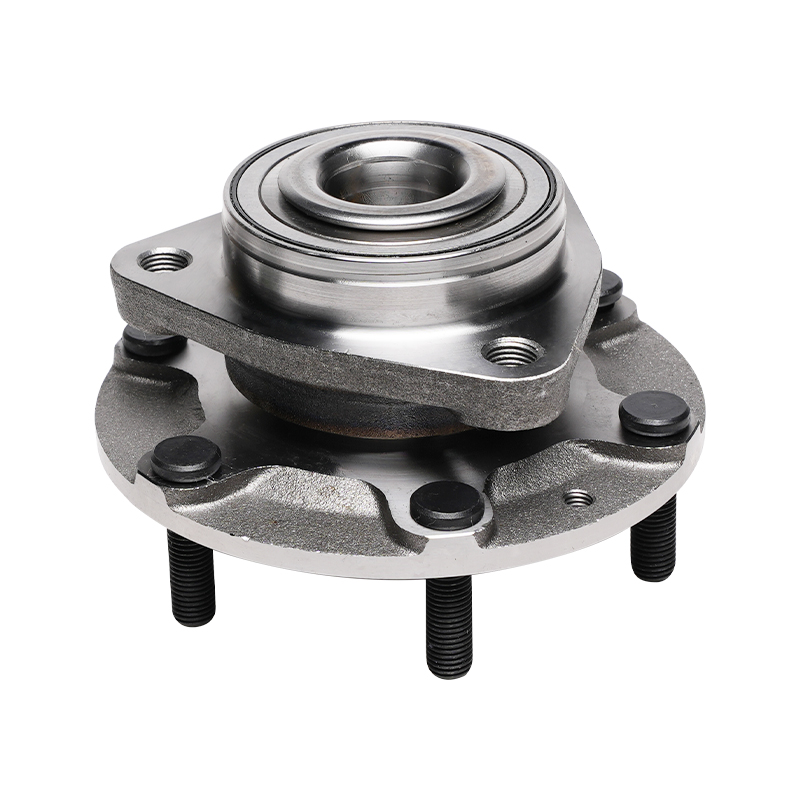
Wheel bearings allow the wheel hub to rotate around the spindle or axle shaft with minimal friction. In modern hub unit designs (the sealed, pre-assembled unit that integrates the inner and outer bearing rings, rolling elements, cage, and seals into a single component), the bearing is designed to last the vehicle's operating life under normal conditions. The lubrication is sealed in at assembly and does not require periodic maintenance. What causes premature failure is abnormal loading — the bearing sees forces it wasn't designed to handle on a sustained basis.
Overloading is the most common cause. Hitting curbs, potholes, and road debris transmits impact loads through the wheel into the bearing at magnitudes that can exceed the bearing's dynamic load rating and deform or crack the rolling elements or races. Normal road use over many miles eventually produces subsurface fatigue cracks in the bearing races — this is the normal wear-out mechanism — but abnormal impacts accelerate this process dramatically.
Seal failure is a second cause. The seals on a hub unit bearing prevent contamination from entering the bearing and lubricant from escaping. When the seal is breached — by impact damage to the seal lip, by corrosion of the seal seat, or by the physical wear of the seal lip over very high mileage — water, grit, and other contaminants enter the bearing. Contamination causes abrasive wear of the rolling elements and races, accelerating the development of the surface and subsurface damage that produces noise.
The most common and earliest symptom of a failing wheel bearing is a continuous humming or grinding noise that changes with vehicle speed. Unlike tire noise, which is relatively constant at a given speed on consistent road surfaces, wheel bearing noise has a distinctive quality: it tends to be steady and continuous, often described as sounding like driving on rumble strips even on a smooth road, and its pitch and volume vary proportionally with vehicle speed rather than with engine speed. Accelerating increases the sound; decelerating reduces it; the sound continues at the same frequency even when the clutch is depressed, or the vehicle is in neutral, because the bearing is rotating with the wheel regardless of whether the drivetrain is engaged.
The humming quality at lower speeds transitions to a grinding or growling quality at higher speeds as the bearing damage progresses. This is because the damaged bearing surfaces produce different noise characteristics at different rotational frequencies — early damage produces the lower-frequency hum as damaged elements pass through the load zone, while advanced damage with larger surface defects and increased roughness produces the harsher grinding sound.
A classic diagnostic test for wheel bearing noise is observing whether the sound changes when the vehicle is gently weaved or loaded in cornering. When a vehicle corners, the lateral load distribution between the left and right bearings changes — the outside bearing of a left turn takes more load than the inside bearing. If the bearing on the left side is failing, a right turn (which loads the left bearing) will increase the noise, while a left turn (which partially unloads the left bearing) will reduce it. This speed-and-load sensitivity is diagnostic: a noise that increases in one cornering direction and decreases in the opposite direction points strongly to a specific wheel bearing.
This test should be done at low speed in a safe environment — gentle weaving at 30–50 km/h in an empty parking lot is sufficient to observe the effect. The change in noise with steering input is often quite pronounced in a failing bearing and allows identification of the specific corner where the problem originates, even before a more formal inspection.
As wheel bearing damage progresses, the roughness of the bearing surfaces produces vibration that transmits from the wheel through the suspension into the vehicle structure. For front wheel bearings, this vibration transmits through the steering column and is felt in the steering wheel — particularly at certain speed ranges where the bearing's rotational frequency coincides with a resonant frequency of the steering system. For rear wheel bearings, the vibration transmits through the floor and is typically felt in the seat rather than the steering wheel.
Vibration from a wheel bearing is often confused with tire balance vibration, which is also speed-sensitive. The distinction: tire balance vibration typically appears at a specific speed range (commonly 80–100 km/h) and may become less noticeable at higher speeds; bearing vibration is more progressively increasing with speed and is accompanied by the characteristic humming or grinding sound that tire balance issues do not produce.
In advanced bearing failure, the bearing's internal clearance increases as rolling elements and races wear. This increased clearance can become detectable as physical looseness in the wheel — if you jack the wheel off the ground and try to rock it in the top-to-bottom direction (with both hands at the 12 and 6 o'clock positions of the tire), a small but detectable wobble indicates the bearing's internal clearance has exceeded acceptable limits. Normal bearings should have negligible play in this test.
This test should be performed with the wheel still on the ground first — if play is felt with the wheel on the ground, the bearing is in serious failure and should not be driven further until replaced. The same rocking test with the wheel off the ground will show somewhat more movement in a normal bearing due to the load relief, but excessive movement (more than a few millimeters) still indicates advanced bearing wear.
Modern hub unit bearings integrate the ABS wheel speed sensor ring (the tone ring or encoder ring that the ABS reads to determine wheel speed). When a bearing fails severely enough that the internal clearance allows the tone ring to move relative to the sensor, or when the tone ring is damaged by the bearing's internal damage, the ABS sensor detects an irregular or absent signal and illuminates the ABS warning light. ABS or traction control warning lights appearing alongside noise or vibration symptoms indicate that the bearing failure has progressed far enough to affect the wheel speed sensing function — replacement is urgent.
After confirming that the symptoms suggest a wheel bearing, identifying which corner is the source before disassembly saves diagnostic time. The cornering load test described above is the most reliable initial check. Additional confirmation:
Listen for the sound's direction while a passenger rides in the vehicle. A wheel bearing noise is louder on the side where the failing bearing is located — a growl from the left rear is typically louder from the left side of the vehicle. Drive slowly in a quiet area with windows down to allow directional hearing.
If a road test on a suitable surface is possible, the sound increasing under acceleration (which shifts load rearward) and decreasing under deceleration, or vice versa, can help localize whether a front or rear bearing is the source. Front wheel bearings tend to be more sensitive to steering inputs; rear bearings tend to be more sensitive to acceleration and braking load shifts.
Early replacement — as soon as the diagnostic symptoms are clear — prevents the cascading damage that occurs when a severely worn bearing is allowed to operate. A bearing with worn rolling elements and races produces metal contamination within the bearing that accelerates wear further. If the bearing fails while driving, the wheel may jam or seize, potentially causing loss of vehicle control. Hub unit bearings that have failed to the point of detectable wheel play should not be driven on public roads.
The appropriate replacement interval is: whenever a clear humming or grinding noise attributable to a wheel bearing is confirmed, or whenever wheel play testing shows abnormal movement, or whenever the ABS function is affected by bearing condition. Waiting for the noise to resolve on its own is not appropriate — wheel bearings do not self-recover, and the damage progression is irreversible.
A wheel bearing noise is typically continuous and present whenever the wheel is rotating at the affected speed, but its apparent volume can vary with temperature — a failing bearing often sounds worse when cold and slightly quieter after it has warmed up, because the grease becomes less viscous at operating temperature and provides slightly better lubrication. This temperature-dependent variation is sometimes mistaken for the problem "going away," leading drivers to delay replacement. The underlying damage is not reversed by warming up; the bearing continues to degrade. A bearing that sounds noticeably worse when cold but better when warm is still a failing bearing that should be replaced.
This depends on the stage of failure. Early-stage bearing failure with a quiet hum and no other symptoms is generally tolerable for short distances at moderate speeds to reach a repair facility — though this should not be extended to highway driving or long distances, as vibration at high speed accelerates the damage progression. A bearing with audible grinding, detectable wheel play, or ABS illumination should not be driven at highway speeds and should be repaired urgently. A bearing that has failed — producing severe grinding, visible wobble, or where the wheel cannot rotate freely — should not be driven at all. If in doubt, the safer choice is to have the vehicle towed to a repair facility rather than driven, because a completely failed bearing can cause sudden wheel lockup without warning.
For modern hub unit bearing assemblies (which replace the entire unit, including the bearing, hub, and ABS tone ring in a single component), replacement time is typically 45–90 minutes per corner for a straightforward installation on most passenger vehicles. The opposite corner does not need to be replaced simultaneously unless it also shows symptoms — wheel bearings on opposite sides of the same axle are not necessarily at the same wear stage, and it is normal for one side to fail before the other. However, if one bearing has failed and the vehicle has significant mileage, checking the condition of the opposite side bearing during the same service is reasonable to determine whether it is approaching failure. Some technicians recommend replacing axle pairs as a preventive measure on high-mileage vehicles; others replace only the confirmed failed bearing. This decision is a matter of professional judgment based on the specific vehicle's history and the cost of labor for a potential second repair in the near future.
Request for a call today


Tel: +86 0575-87785959

E-mail: [email protected]

Add:Room 215, Building 3, No. 1887, Asia Pacific Road, Wenyan Street, Xiaoshan District, Hangzhou, Zhejiang, China
